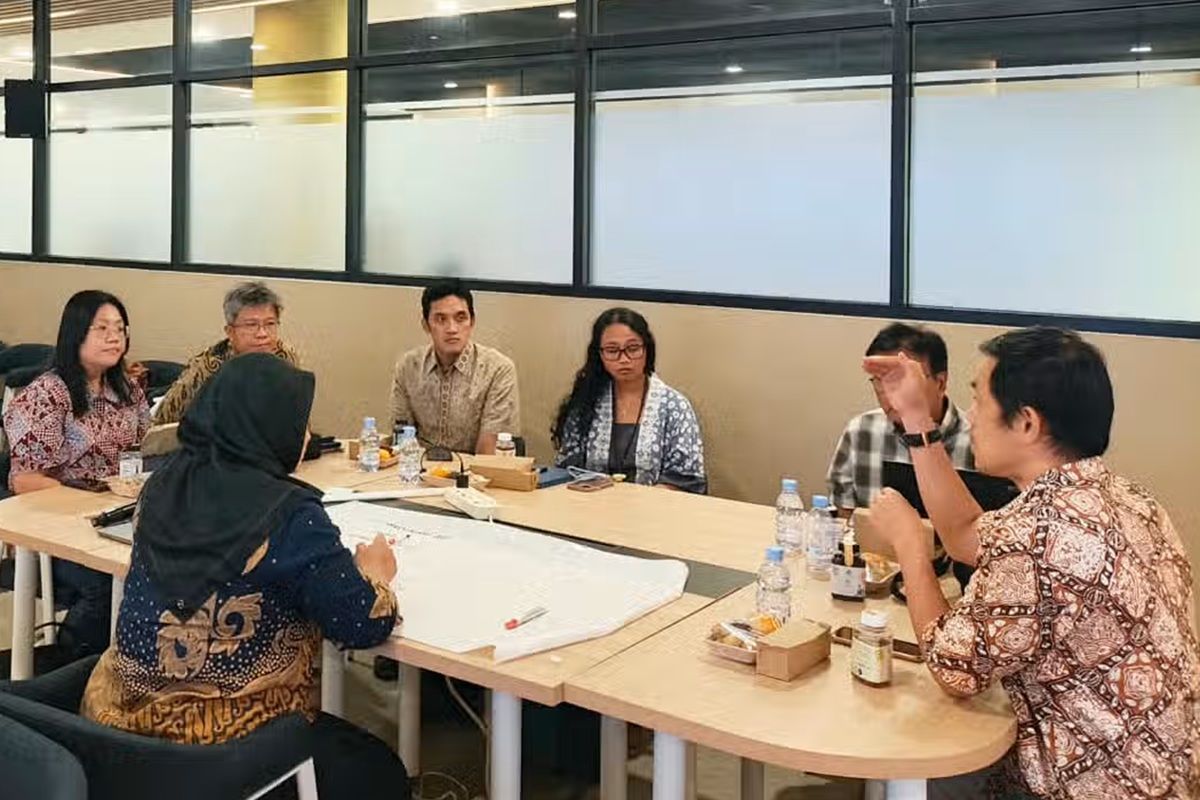
Bogor (ANTARA) - Centre for Sustainable and Transdisciplinary Science Studies (CTSS) and the Department of Silviculture, Faculty of Forestry and Environment, IPB University, held a discussion regarding the Peatland Circularity Consortium (PCC).
“Peatlands have often been discussed negatively because of forest fires, but in fact, they can actually be a blessing through the circular economy,” says Head of the CTSS IPB University, Prof. Husin Alatas, in Bogor, West Java, on Friday.
The discussion took place via hybrid dialogue at IPB Dramaga Campus in Bogor Regency, West Java, which was part of the “Diaspora with Impact” Program featuring Dr Aritta Suwarno, an Indonesian diaspora member from Wageningen University and Research (WUR) in the Netherlands.
These peatland circularity consortiums are expected to connect universities and research institutions, the government, NGOs, the business sector, and local communities to promote peatland landscapes that are circular, regenerative, and provide added value to communities
Chief of Fellow CTSS IPB University Prof Damayanti Buchori highlighted that there has been a great deal of research on peat, but its implementation is still insufficient.
" The PCC are expected not only to implement existing research but also act as a catalyst to accelerate restoration, regenerative processes, and many more," she said.
According to him, this transdisciplinary approach will be vital because peatland issues are highly complex. He also highlighted the importance of alternative funding, a clear business model for the industry and the decolonization of knowledge through the integration of local knowledge.
Several experts pointed out that water management is fundamental. Head of CIMTROP at the University of Palangka Raya, Prof Adi Jaya, said that even though peat characteristics are different from one location to another, hydrological management should be applied across regions.
"With hydrology as the foundation, various options for economic utilization can be developed without neglecting the ecological functions of peatlands,” he said.
IPB University peat expert, Prof Dr Suria Tarigan, highlighted the relationship between hydrology, peat characteristics, and crop selection. Crop selection should be compatible with peat hydrology, which has the potential to reduce the need for excessive drainage.
From an industry perspective, CEO of PT Bangka Asindo Agri, Fidrianto, shared his experience in developing a circular sago industry using a zero-waste approach.
He pointed out that sago has the potential to serve as a commodity that links economic utilization with more sustainable peatland management.
Meanwhile, Wageningen University and Research (WUR) Netherlands emphasized that peatland exploitation should create long-term economic value while continuing to strengthen ecological functions.
Pewarta: Alif Rahman AuliaEditor : Syarif Abdullah
COPYRIGHT © ANTARA 2026
Dilarang keras mengambil konten, melakukan crawling atau pengindeksan otomatis untuk AI di situs web ini tanpa izin tertulis dari Kantor Berita ANTARA.


